How Much Does Roof Replacement Cost in Tacoma?
April 17, 2026
TPO vs Torch Down for Low-Slope Roofs
May 8, 2026
Western Washington roofs deal with heavy rain, damp conditions, moss growth, shade, wind, and long wet
seasons. That means the best roofing material is not always the one with the flashiest brochure. It is the
one that performs well in our climate, fits the roof design, and is installed correctly
Why weather matters so much here
In drier climates, a roof may get by with average details and still last a while. In Western Washington,
moisture exposes shortcuts fast. Poor flashing, weak ventilation, low-quality underlayment, and incorrect
installation around penetrations can lead to leaks or early deterioration.
Architectural composition shingles
For many homes, architectural composition shingles are the most practical balance of cost, appearance,
and reliability. They work well on standard sloped roofs, come in a wide range of colors, and can provide
strong long-term value when paired with good ventilation and proper flashing details. A quality shingle
system is often the best fit for homeowners who want dependable performance without stepping up to a
premium material category.
Premium shingles
Premium shingles can offer better wind ratings, improved appearance, and stronger manufacturer system
options. For homeowners who plan to stay in the house long term, this can be a worthwhile upgrade.
Premium shingles may also help when a home has more visible roof areas and curb appeal matters.
Metal roofing
Metal roofing can be an excellent choice in Western Washington, especially when homeowners want
longevity and a clean look. Metal sheds water very well, but it also demands skilled detailing. Trim work,
penetrations, transitions, and ventilation still matter. Metal is not a magic fix for a poorly designed roof, but
on the right project it can be a very strong long-term system.
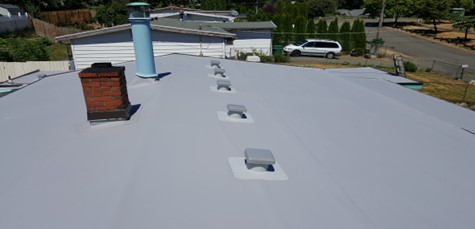
TPO and other low-slope systems
For low-slope roofs, TPO and similar single-ply systems are often a better fit than trying to force a
steep-slope product onto a roof that does not drain well. Low-slope roofs need systems designed for that
application. Seams, drainage, penetrations, and edge details are especially important.
Cedar, tile, and specialty materials
Some homes call for cedar, tile, or another specialty product because of the home style or owner
preference. These can perform well, but they usually bring higher cost and should be selected carefully
based on maintenance expectations, structure, and roof design.
The system matters, not just the top layer
A roof is more than shingles or membrane. In Western Washington, underlayment, flashings, edge metal,
ventilation, and workmanship all matter. A good product installed poorly can still become a bad roof.